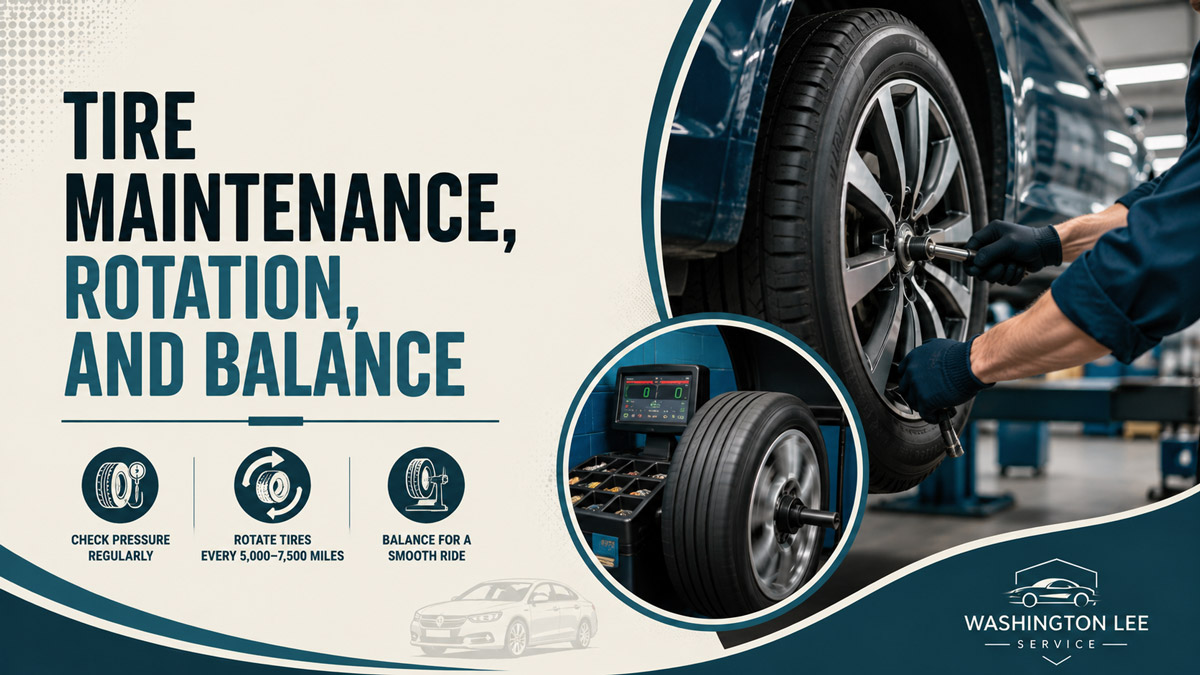
Tires are the only part of the car that touches the road, and most of their problems are preventable with two habits: pressure checks and rotation.
The street view of the shop property shows a lot full of cars, which matches the everyday rhythm of a neighborhood shop handling tire service. Here is what tire maintenance actually involves.
Why Tire Pressure Matters
Underinflation makes the tire run hot, wear the outer edges, and hurt fuel economy.
Overinflation wears the center and makes the ride harsh.
The vehicle’s recommended pressure is on the door placard, and the shop checks and adjusts it as part of tire service.
What Rotation Does
The front and rear tires wear differently.
On front-wheel-drive cars, the fronts wear faster from steering and drive. Rotation moves the tires between positions so the set wears evenly and lasts longer.
The pattern depends on the vehicle: front-wheel drive, rear-wheel drive, all-wheel drive, and directional tires each rotate differently.
How Often to Rotate
A common interval is every 5,000 to 8,000 miles, but follow the vehicle’s guidance.
If the set has not been rotated in years, the shop can even things out at the next visit and start the cycle.
What Balancing Does
Balancing evens out the weight of the wheel and tire assembly by adding small weights at the right points.
An out-of-balance assembly vibrates at highway speed and wears the suspension parts faster.
A new tire is mounted and balanced together; an older set gets balanced when the ride signals it.
Reading the Wear Pattern
Inner-edge wear points at alignment angles that tilt the tire inward. Outer-edge wear points the other way.
Center wear means the tire ran overinflated, and both edges worn means it ran low.
A shop reads the pattern as a clue, which is why the tires page and the alignment conversation belong together.
When a Tire Is Beyond Rotation
A tire with low tread, sidewall damage, a bulge, or a repaired puncture in the wrong place is beyond rotation.
The shop will say so plainly rather than rotating a tire that should be replaced, and it can quote the current tire and mounting options.
The Seasonal Check
Ohio’s temperature swings change tire pressure by several PSI between seasons, which is why the pressure check matters twice a year.
Before a road trip, add a visual check: look for nails, cuts, and bulges, and let the shop confirm the spare if the car has one.
What to Tell the Shop
Mention any vibration, pull, or uneven wear when you book.
If you bought tires elsewhere, say so; the shop can still rotate and balance them where the vehicle allows.
The goal is the same: a set that wears evenly, rides smoothly, and lasts its full life.
When New Tires Make Sense
Tread depth is the honest measure.
The quick check is the penny test: a penny in the groove with Lincoln’s head down should be partially covered; if you can see the top of the head, the tread is low.
Tire shops also age-check the sidewall, because a tire can be worn out by years even with tread left.
When the shop recommends a new set, it can quote the current options and mounting together, so the visit covers the part and the install.
The Spare and the Winter Set
A full-size spare should match the pressure and the rotation pattern where the vehicle allows; a compact temporary spare has its own speed limit and is not part of the rotation set.
If a car runs winter tires, the changeover is also a rotation, because the sets store differently and the springs and mounts deserve a look twice a year.
The seasonal change is a natural appointment to add a brake check while the wheels are already off.
The Honest Current Condition
The shop reports pressure, tread, and wear pattern numbers so you can see the set’s condition.
A tire that looks fine from the driver’s seat can be unevenly worn, balding on the inner edge, or damaged on the sidewall, and the report puts those facts on paper.
That report is the baseline for the next rotation, and it turns tire maintenance from a habit into a documented plan.
Related Reading
- Brake Rotors, Pads, and a Spongy Pedal
- Oil Change Myths, Intervals, and What the Car Tells You
- Tires, Rotation & Balance
Schedule a tire check at the shop on Lee Road.