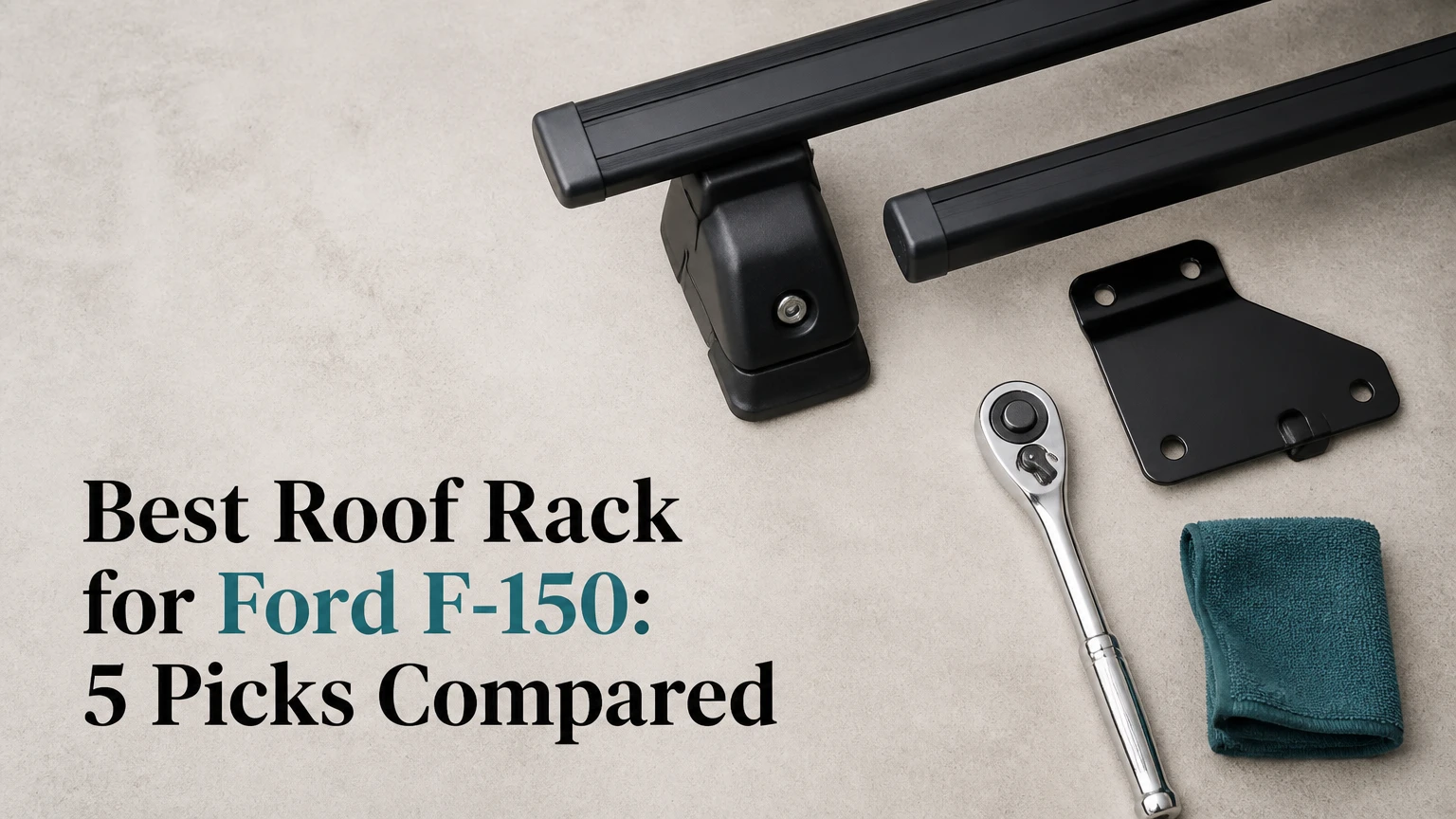
The best roof rack for Ford F-150 owners is the Rhino-Rack Vortex 2500 for removable kayak, ski, and cargo-box use, while Front Runner Slimline II and UpTOP Overland Kilo suit permanent expedition builds. The correct choice depends on model year, cab, roof configuration, cargo weight, and whether drilling is acceptable. Verify the vehicle-specific fit kit before purchase.
Key Facts at a Glance
A no-drill F-150 crossbar system typically costs $350-$700 and installs in 30-60 minutes.
A platform rack usually costs $900-$2,000 before accessories and may require permanent drilling.
A rack’s dynamic rating applies while driving; its static rating applies only when parked.
Ford F-150 roof capacity is not one universal number across every model year, cab, trim, and roof design.
SuperCrew, SuperCab, regular-cab, Raptor, panoramic-sunroof, and bare-roof fitments are not automatically interchangeable.
Roof cargo raises the center of gravity and may reduce practical payload before the truck reaches its door-label payload limit.
Which Roof Rack Is Best for a Ford F-150?
The Rhino-Rack Vortex 2500 is the best overall Ford F-150 roof rack for most owners because it combines removable mounting, broad accessory compatibility, built-in locking options, and a moderate installation burden. A permanent platform is better for expedition equipment, whereas Thule WingBar Evo is better when low noise and refined daily use matter most.
Our Top Picks
| Category | Recommended rack | Typical price | Typical install time | Best use |
|---|---|---|---|---|
| Best overall | Rhino-Rack Vortex 2500 | $450-$700 | 30-60 minutes | Kayaks, skis, cargo boxes |
| Best quiet daily driver | Thule WingBar Evo | $650-$900 | 45-75 minutes | Frequent highway travel |
| Best budget crossbars | Yakima BaseLine | $400-$650 | 45-75 minutes | Occasional recreational gear |
| Best permanent platform | Front Runner Slimline II | $1,200-$2,000 | 4-8 hours | Overlanding and modular cargo |
| Best low-profile overland rack | UpTOP Overland Kilo | $1,000-$1,700 | 2-5 hours | Lights, traction boards, expedition loads |
These prices are typical street ranges for the rack, vehicle fit kit, and basic mounting hardware. Cargo baskets, kayak cradles, fairings, locks, tie-downs, and freight can add $100-$800.
How We Chose the Best F-150 Roof Racks
The ranking weighs vehicle fitment, dynamic load rating, attachment method, crossbar spread, noise control, accessory ecosystem, installation risk, and removal time. Manufacturer fit guides take priority over marketplace listings because the same bar length can use different clips, pads, torque values, or door-jamb positions on different F-150 generations.
A rack that carries a heavy load but requires unsafe drilling is not a better daily-driver choice. Conversely, a clamp-on bar is a poor substitute for a platform when the owner needs several traction boards, recovery tools, solar panels, and expedition cases.
The strongest practical distinction is permanence. No-drill systems preserve the factory roof and can be removed, while drilled platforms provide more mounting area but create leak, corrosion, and resale obligations.
1. Rhino-Rack Vortex 2500: Best Overall
The Rhino-Rack Vortex 2500 is the best overall choice for F-150 owners carrying recreational equipment without wanting a permanent roof platform. Its aerodynamic aluminum bars, vehicle-specific pads and clamps, locking hardware, and accessory channels support common kayak, ski, bike, and cargo-box attachments.
The system is especially useful for a SuperCrew owner who carries camping bins in the bed and places two kayaks above the cab. Typical bar systems provide about 165 pounds of dynamic capacity, but the exact limit comes from the complete vehicle-specific kit and Ford’s roof guidance, not from the bar alone.
Rhino-Rack’s Vortex bar profile is quieter than a square steel bar, although no crossbar is silent at highway speed. Rubber strips must cover unused channels, and a fairing can reduce turbulence when the front bar sits close to the windshield.
Drawback: Clamp systems place hardware near the upper door seals and provide less accessory surface than a platform. Repeated removal also increases the chance of misplaced pads or incorrect reinstallation.
Choose this if: You want removable bars for kayaks, skis, or a rooftop cargo box.
Skip it if: You need permanent light mounts, full-length slats, or a tent platform.
2. Thule WingBar Evo: Best for Quiet Highway Use
Thule WingBar Evo is the best F-150 roof rack for owners who prioritize low aerodynamic noise, polished fitment, and frequent highway driving. Thule’s WingBar shape, channel covers, locking cores, and vehicle-specific clamp kit create a refined two-bar system for cargo boxes and sports carriers.
A Thule setup commonly costs $650-$900 once bars, feet, locks, and the F-150 fit kit are included. Installation generally takes 45-75 minutes because the feet require accurate positioning and torque rather than permanent roof modification.
The WingBar Evo works well when the truck spends weekdays in town and weekends transporting a kayak or skis. Its limitation is not ordinary recreational weight. The limitation is mounting real estate: two bars cannot match a platform’s attachment points for recovery boards, awnings, lighting, and distributed expedition cargo.
Drawback: Thule fit kits are highly vehicle-specific. A bar-and-foot combination that fits a 2015 SuperCrew may not fit a 2021 model, a Raptor, or a truck with a panoramic roof.
Choose this if: Wind noise, locking convenience, and daily appearance matter more than maximum mounting area.
Skip it if: Your build requires a perimeter platform or rooftop tent.
3. Yakima BaseLine: Best Budget Crossbar System
Yakima BaseLine is the best budget-oriented option when the F-150 has a compatible bare-roof fitment and the owner wants a recognizable accessory ecosystem. BaseLine uses vehicle-specific clips and pads, aerodynamic crossbars, and locking towers for bikes, kayaks, skis, and cargo boxes.
Typical system cost is $400-$650, with installation taking about 45-75 minutes. The value comes from buying only the crossbar foundation needed today, then adding a kayak saddle or cargo box later instead of purchasing a full platform.
BaseLine is a good match for an F-150 that carries one or two recreational items several times each month. A properly installed clamp system should sit squarely, maintain even pad contact, and preserve door operation without crushing the weather seal.
Drawback: Budget pricing does not remove fitment research. Yakima’s clips, tower positions, bar length, and rated load can change by cab, year, roof treatment, and accessory configuration.
Choose this if: You need occasional cargo carrying at the lowest reasonable system cost.
Skip it if: You drive rough trails with concentrated loads or want permanent recovery-gear mounts.
4. Front Runner Slimline II: Best Permanent Platform
Front Runner Slimline II is the best permanent platform for a heavily equipped F-150 used for overlanding, commercial support, or repeated modular cargo transport. Its slatted aluminum platform accepts low-profile mounting hardware for cases, awnings, recovery boards, solar panels, and specialized expedition accessories.
A complete installation typically costs $1,200-$2,000 and takes 4-8 hours, depending on the truck, platform length, drilling template, headliner access, and installer experience. Some F-150 configurations use a roof-channel mounting method, but the exact kit determines whether drilling, track installation, or factory attachment points are involved.
The platform distributes accessories across more mounting positions than two crossbars. That matters when a long case or awning creates leverage at the rack feet. It also lets owners reposition equipment without replacing the entire base system.
Drawback: Permanent installation creates roof-penetration, sealant, corrosion, and resale concerns. A platform can also increase wind noise and fuel consumption, especially when loaded with flat accessories.
Choose this if: Your F-150 is a long-term expedition or work platform.
Skip it if: You remove all roof equipment between trips or park in low-clearance garages.
5. UpTOP Overland Kilo: Best Low-Profile Expedition Rack
UpTOP Overland Kilo is the best low-profile option for selected F-150 SuperCrew and Raptor applications that need a strong, clean-looking platform for lights and overland equipment. UpTOP’s vehicle-specific designs use aluminum construction and a modular layout rather than the limited footprint of ordinary crossbars.
The Kilo’s published fitment is not universal across F-150s. Earlier product applications commonly target specific SuperCrew years and Raptor generations, so buyers must confirm model year, cab, roof treatment, and sunroof clearance before ordering.
A typical system costs $1,000-$1,700 and requires roughly 2-5 hours for installation, depending on whether the kit uses existing attachment points or a drilled mounting process. The low profile helps reduce the visual height of a loaded truck, but the rack still adds clearance requirements.
Drawback: The rack’s strength and low profile do not override the F-150’s roof limit. A platform marketed for a high static load is not permission to exceed the vehicle’s dynamic rating while driving.
Choose this if: You want a low-profile permanent platform for an overland build.
Skip it if: Your truck is outside the listed fitment or you need a quickly removable system.
Which Rack Type Fits Your F-150?
F-150 roof racks fall into three practical types: clamp-on crossbars, track-mounted systems, and permanent platforms. Clamp-on bars are the safest default for owners who have not confirmed roof attachment points, while platforms make sense only when installation instructions and vehicle limits support the intended load.
| Rack type | Attachment | Typical cost | Typical installation | Best application |
|---|---|---|---|---|
| Clamp-on crossbars | Door-jamb clamps and rubber pads | $350-$900 | 30-75 minutes | Kayaks and cargo boxes |
| Track-mounted bars | Semi-permanent roof tracks | $600-$1,200 | 2-4 hours | Adjustable bar spacing |
| Permanent platform | Roof channels, bolts, or Rivnuts | $900-$2,000 | 4-8 hours | Expedition accessories |
| Bed rack alternative | Bed rails or stake-pocket mounts | $500-$1,800 | 1-5 hours | Lumber and long cargo |
A clamp rack does not require drilling, but its hooks must match the F-150’s door opening and roof contour. A platform gives more mounting positions, yet every roof penetration demands correct sealing and corrosion protection.
How Much Weight Can an F-150 Roof Rack Carry?
An F-150 roof rack’s safe moving load is the lowest applicable limit among the vehicle roof, rack, feet, fit kit, crossbars, and accessory. Typical aftermarket crossbar systems advertise approximately 150-165 pounds dynamically, while platform ratings may be higher, but those numbers are not universal Ford roof ratings.
Static capacity is a separate figure used when the truck is parked. Some platform manufacturers publish static capacities in the 600-850-pound range for tent use, but a rooftop tent’s occupants, mattress, bedding, rack, and mounting hardware all count toward the static load.
| Capacity term | Applies when | Typical figure | What counts |
|---|---|---|---|
| Dynamic rack rating | Truck moving | 150-165 lb for many crossbar kits | Cargo, carrier, bars, feet |
| Platform dynamic rating | Truck moving | Often 200-300 lb, kit-dependent | Entire loaded platform |
| Static platform rating | Truck parked | Sometimes 600-850 lb | Tent, occupants, rack, bedding |
| F-150 payload rating | Truck moving or parked | Door label varies by truck | People, cargo, accessories, tongue weight |
Ford’s owner’s manual and the certification label on the driver-side door provide the controlling vehicle information. A rooftop tent also changes crosswind behavior, emergency maneuvering, braking feel, and roof clearance.
Can You Put a Rooftop Tent on an F-150 Cab?
A rooftop tent should be installed only when the rack manufacturer publishes a compatible static rating and the vehicle manufacturer’s roof guidance allows the total stationary load. The tent must remain within the platform’s bar spread, mounting pattern, and dynamic limit after it is folded for travel.
A two-bar recreational rack is generally the wrong foundation for a tent because concentrated tent rails can exceed bar or foot limits. A platform may distribute the load better, but a high static rating does not make a drilled platform suitable for every cab or roof.
Does Cab Configuration Change Fitment?
Cab configuration changes roof length, door geometry, mounting locations, and available crossbar spread, so SuperCrew and SuperCab racks should be treated as different products. Regular cab, SuperCab, SuperCrew, Raptor, and panoramic-sunroof applications require separate fitment confirmation.
Check these details before ordering:
- Model year and generation.
- Regular cab, SuperCab, or SuperCrew.
- Raptor or standard F-150 body.
- Bare roof, factory rails, or molded ditch trim.
- Standard roof or panoramic sunroof.
- Crossbar length and permitted front-to-rear spread.
- Whether the doors, antenna, satellite receiver, and sunroof can operate normally.
Marketplace listings often combine multiple years into one title. The manufacturer’s vehicle selector and installation manual are more reliable than a seller’s “fits F-150” statement.
How Do You Install a No-Drill F-150 Rack?
A no-drill F-150 rack normally installs in 30-75 minutes, provided the vehicle-specific kit is complete and the roof is clean. Success depends on accurate bar placement and torque, not on tightening the clamps as hard as possible.
Step 1: Inspect the Kit and Roof
Confirm both bars, four feet, four pads, vehicle clips, locks, torque tool, end caps, and instructions. Wash and dry the roof and upper door-jamb areas, then inspect weather seals for tears or displaced sections.
You will know the preparation is correct when every pad sits on clean paint and no clip contacts bare glass or unsupported plastic trim. A common mistake is starting with a universal clip set that was never designed for the truck.
Step 2: Measure the Manufacturer’s Positions
Measure from the windshield reference point or another location specified by the manual. Mark both sides with low-tack tape, then verify the rear-bar spread before tightening anything.
Equal left and right measurements prevent a rack from sitting diagonally. Do not copy another F-150’s dimensions because cab length and roof curvature can differ.
Step 3: Seat the Pads and Clips
Fit each rubber pad to its correct foot and place the assembly on the marked location. Insert the metal clip into the upper door opening without pinching the seal or forcing the hook against painted metal.
The door should close normally with the clip installed. If the door needs unusual force, stop and check the clip orientation.
Step 4: Torque in Small Increments
Tighten each side three or four turns at a time, alternating diagonally until the supplied torque indicator reaches the manufacturer’s setting. Never substitute maximum hand force for a torque tool.
The success checkpoint is a centered bar, even pad compression, normal door operation, and a torque indicator at specification. Over-tightening can deform thin sheet metal or damage the weather seal.
Step 5: Seal the Unused Bar Channels
Install the supplied rubber or plastic channel strips and end caps. Open channels can produce a high-pitched whistle even when the rack is mechanically secure.
Road-test at 30, 50, and 65 mph without cargo. Recheck torque after the first trip and again after roughly 100 miles, following the product manual.
What Does a Drilled Platform Installation Require?
A drilled platform installation typically takes 4-8 hours and requires a drill, correctly sized bits, a center punch, drill stop, vacuum, rust inhibitor, approved sealant, torque wrench, and a helper. The rack template and the manufacturer’s hole size control the work.
Drilling through a roof ditch is not a casual upgrade. A mistake can pierce the headliner, miss a reinforcement, create a leak path, or leave unprotected steel exposed under the fastener.
Use the platform manual’s sequence:
- Remove or open only the roof-ditch trim specified by the instructions.
- Dry-fit the rack and mark holes from the supplied template.
- Center-punch each mark and use a drill stop.
- Vacuum metal chips immediately.
- Apply the specified corrosion protection and automotive sealant.
- Install Rivnuts or fasteners using the manufacturer’s tool and setting procedure.
- Torque the feet in stages and leak-test with controlled water.
Marine or household silicone is not automatically suitable. Use the sealant specified by the rack maker because some products interfere with paint adhesion, fastener service, or roof coatings.
What Are the Main Alternatives to a Cab Roof Rack?
A bed rack is usually better for lumber, ladders, and long construction materials because it keeps weight lower and avoids roof drilling. A hitch carrier suits bulky boxes, while a trailer provides the highest capacity but adds maneuvering, storage, registration, and tongue-weight considerations.
| Alternative | Typical cost | Typical capacity basis | Best use | Main limitation |
|---|---|---|---|---|
| F-150 bed rack | $500-$1,800 | Manufacturer bed-rack rating | Lumber, ladders, tents | Uses bed height and space |
| Hitch cargo carrier | $150-$600 | Hitch tongue rating | Coolers and bulky bins | Reduces departure angle |
| Trailer | $1,500-$8,000+ | Tow rating and tongue rating | Heavy or oversized cargo | Requires towing equipment |
| Tailgate pad or bed extender | $80-$350 | Product-specific | Bikes, boards, long items | Less theft protection |
| Cab crossbars | $350-$900 | Vehicle and rack rating | Kayaks, skis, boxes | Limited platform area |
A roof rack is a poor choice for loose steel, wet firewood, dense spare parts, or any load that can exceed the roof limit. Lower mounting usually improves handling.
Common Problems and How Do You Fix Them?
Wind Whistle Above 50 MPH
Wind noise usually comes from an open underside channel, loose end cap, poorly positioned fairing, or a load that creates turbulence. Install every channel strip, seat the end caps, and confirm the fairing gap against the manufacturer’s instructions.
Creaking on Uneven Roads
Creaking usually indicates pad movement, a loose accessory, incorrect torque, or a platform joint binding under chassis flex. Remove the accessory, inspect for grit beneath the pads, and retorque only after identifying the movement source.
Water Leaks After Platform Installation
Water intrusion usually results from an unsealed hole, damaged ditch trim, incorrect fastener washer, or sealant failure. Dry the interior, perform a controlled hose test one mounting point at a time, and repair the leak before reinstalling cargo.
Paint Damage Beneath Clamp Feet
Paint marks develop when dirt is trapped between a pad and the roof or when a clip rubs during installation. Clean both surfaces, replace damaged rubber, and stop using the rack until the clip alignment is corrected.
Cargo Shifts or Straps Hum
Movement comes from poor contact points, elastic cords, loose cam buckles, or insufficient front and rear restraint. Use rated cam straps, bow and stern lines for kayaks when appropriate, and inspect every tie-down after the first 10 miles.
What Is the Real Cost of an F-150 Roof Rack?
A removable crossbar setup typically costs $450-$900 installed at home, while a permanent platform commonly reaches $1,300-$2,500 after freight, sealant, locks, and accessories. Professional drilling and leak testing can add $300-$900.
| Cost item | No-drill bars | Permanent platform | Typical replacement interval |
|---|---|---|---|
| Base rack and fit kit | $350-$900 | $900-$2,000 | 5-10 years |
| Lock cores and keys | $40-$120 | $40-$150 | As needed |
| Kayak or ski carrier | $100-$350 | $100-$350 | 5-10 years |
| Cargo basket or box | $250-$1,500 | $250-$1,500 | 5-15 years |
| Professional installation | $0-$250 | $300-$900 | One-time |
| Sealant and hardware service | $10-$50 | $50-$200 | 2-5 years |
These ranges exclude a rooftop tent, which can add $900-$4,000 and substantially changes the loading calculation.
Which Ford F-150 Roof Rack Should You Pick?
Choose Rhino-Rack Vortex 2500 for removable recreational cargo, Thule WingBar Evo for quieter daily highway use, Yakima BaseLine for a lower-cost accessory foundation, Front Runner Slimline II for a permanent modular platform, and UpTOP Overland Kilo for a compatible low-profile expedition build.
The best roof rack for Ford F-150 use is the lightest system that safely supports the intended gear while preserving the truck’s fitment, handling, clearance, and warranty requirements. Confirm the exact year and cab before buying, then use the lowest applicable capacity rating.
FAQ
Will a Ford F-150 roof rack fit a Ford Super Duty?
A Ford F-150 roof rack should not be assumed to fit an F-250 or F-350. Super Duty roofs, doors, dimensions, attachment points, and manufacturer fit kits differ, so use a product listing and installation manual written for the exact truck.
Can I use an F-150 roof rack with a tonneau cover?
Yes, a cab roof rack and tonneau cover can operate together because they occupy separate areas, but long cargo may extend between them. Check kayak, ladder, and lumber clearance, especially when opening the cover or folding a multi-panel tonneau.
How far apart should F-150 crossbars be?
Crossbar spacing must follow the vehicle-specific rack manual, with typical recreational systems using roughly 24-36 inches when the roof permits it. Wider spacing improves kayak stability, but moving bars beyond approved positions can reduce pad contact or exceed the fit kit’s design.
Can I drive through an automatic car wash with roof bars installed?
Most roof-rack manufacturers recommend removing crossbars before an automatic car wash unless the specific wash and rack instructions permit them. Brushes, blowers, guide rails, and chemical detergents can damage locks, fairings, seals, or the vehicle’s roof finish.
Do roof racks reduce F-150 fuel economy?
Roof racks can reduce fuel economy because bars and cargo increase aerodynamic drag, with the effect becoming larger at highway speed and when carrying upright or box-shaped equipment. Removing unused bars and covering slots reduces drag, but the actual loss varies by speed, wind, and load shape.
Is a roof rack better than a bed rack for a kayak?
A cab roof rack usually offers easier kayak loading and leaves the bed available for camping equipment, while a bed rack lowers the load and can support longer boats with less roof contact. Choose the cab rack when bed access matters, and the bed rack when loading height and handling matter more.
Conclusion
The right Ford F-150 rack follows the cargo and the truck, not the product’s advertised capacity alone. Choose Rhino-Rack Vortex 2500 for removable everyday utility, Thule WingBar Evo for refined highway travel, or a Front Runner or UpTOP platform for a properly verified permanent build. Confirm cab, year, roof type, dynamic rating, and total payload before installation.