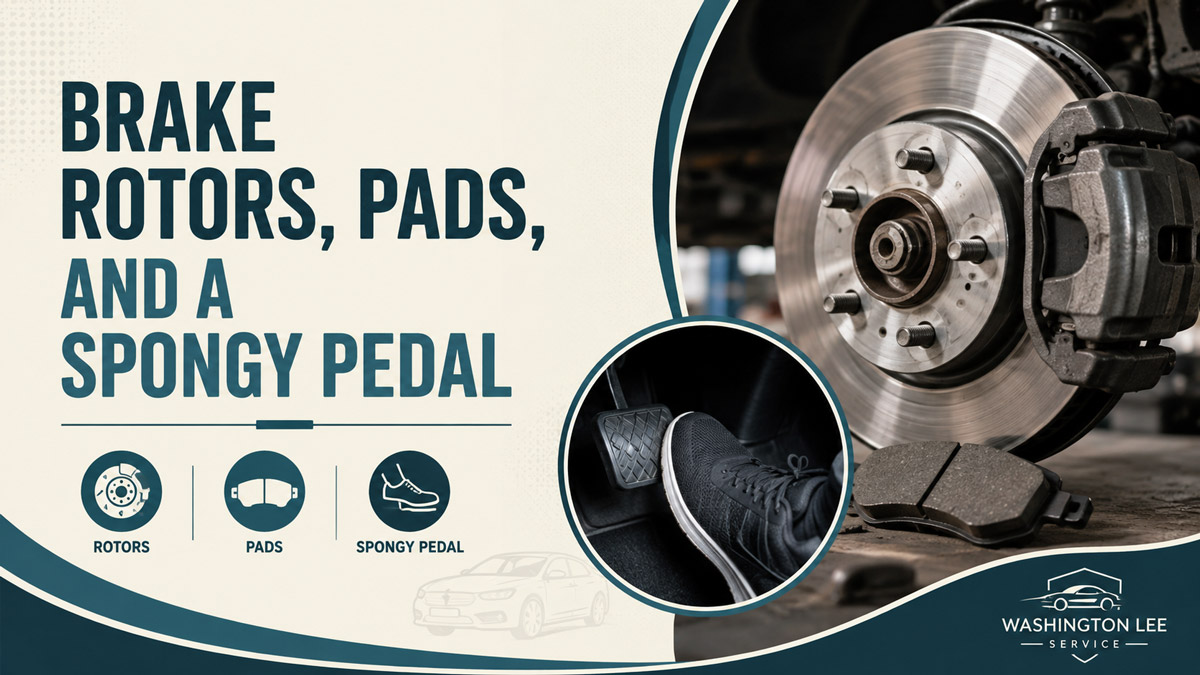
Brake noise and pedal feel are the two reasons most drivers call a shop about stopping, and the two are more connected than they look. Brakes wear as a system: pads, rotors, calipers, and fluid all work together, and the description you give matters more than you think. Here is how to read what your car is telling you.
Squeal
A high-pitched squeal when stopping often means the wear indicators are touching the rotor. It is the pad’s way of saying it is getting thin. Squeal can also come from dust or moisture, which is why the shop checks thickness instead of guessing.
Grinding
Grinding means metal on metal. The friction material is gone and the rotor is being damaged. This should be checked quickly, because every mile of grinding makes the repair more expensive.
Vibration through the pedal
A pulse or vibration through the pedal usually points at the rotors, which may be warped or worn unevenly. It can also come from the suspension, so the shop confirms the source before recommending rotor work.
A spongy or low pedal
Brake fluid does not compress, which is what makes the pedal firm. When fluid ages or absorbs moisture, the pedal can feel softer and stopping distances can grow. If the pedal sinks toward the floor, air or a leak is the first suspect, and that should be checked before the car is driven far.
Pulling to one side
If the car pulls when you brake, a caliper or brake hose may be sticking on that side. This can wear one pad faster than the other and leave you with an uneven brake job.
How pads and rotors wear together
Pads are the friction material that grabs the rotor; the rotor is the metal surface they press against. They wear as a pair. When the pad material runs out, the backing plate meets the rotor and grinding starts. That is why the shop measures both: a pad with a grooved rotor needs rotor work, and a rotor in good shape can often be kept with a pad change alone.
Why rear brakes matter
Front brakes do most of the work, so rear brakes wear slower and get forgotten. A shop that checks only the front can miss a sticking rear caliper or thin rear pads. On cars with electronic parking brakes, rear pad service also includes the proper retraction procedure, which is another reason to let the shop handle it.
Brake fluid and pedal feel
Brake fluid does not compress, which is what makes the pedal firm. When fluid ages or absorbs moisture, the pedal can feel softer and stopping distances can grow. If the reservoir is low, there is usually a leak or worn pads to find. The shop checks fluid condition as part of the brake service.
How the brake visit runs
A brake inspection starts with the symptom you described when you called. The shop lifts the car, measures the pads and rotors, checks the calipers and hoses, and looks at the fluid. The numbers are shared plainly, and the recommendation follows the measurement, not a service interval. If the car only needs pads, the quote says so; if the rotors are at their limit, that is in the report too.
Approval comes before parts are ordered. The shop explains what will be replaced and why, and the work is done with the vehicle’s specifications in view. A road test after the work confirms the feel, and the report closes with what to watch next.
What a brake service visit includes
A brake inspection measures the pads and rotors, checks the calipers and hoses, and looks at the fluid. The shop recommends what matches the wear your car actually has, and you decide before parts are ordered. The finished work is road-checked, and the report says what was measured and what was replaced.
Seasonal brake noise
Morning squeal after rain or high humidity is common and often harmless: surface rust on the rotors cleans off after a few stops. The difference is consistency. Occasional cold-start squeal is one thing; a squeal on every stop, or any grind, is another. Tell the shop whether the noise is constant or occasional.
The fastest way to describe it
Keep it to four facts: what you hear or feel, when it happens, which wheel if you know, and whether the brake light is on. That is everything the counter needs to schedule the right inspection.
Related reading
- When a Check Engine Light Means Worse Before Better
- Tire Maintenance, Rotation, and Balance
- Brake Service & Repair
Book a brake inspection and describe the noise when you call.