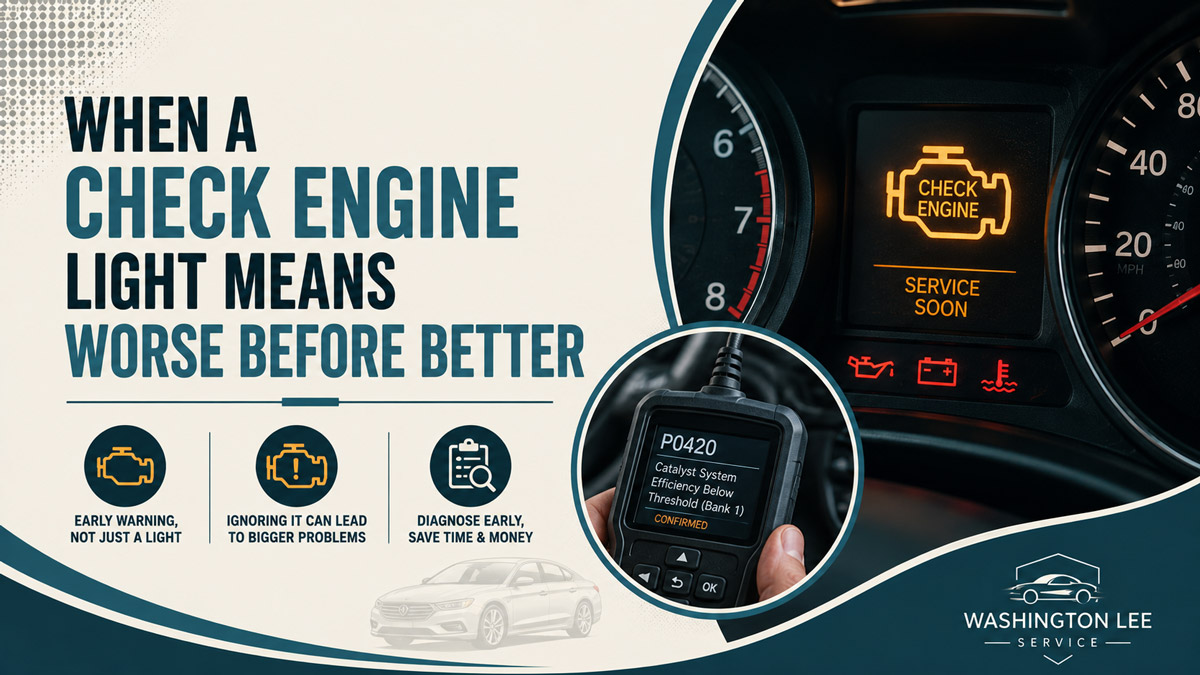
A check engine light is one of the most misunderstood warnings on a dashboard.
The light means the car’s computer has stored at least one diagnostic trouble code, and the code points at a system, not at a part you should buy.
The diagnostic page at this shop explains the path; here is the longer version of the story, including the cases where a repair gets worse before it gets better.
What the Light Means
The code is the car’s own note about what it measured and where.
A P0420 code, for example, says the catalytic converter’s efficiency looks low, but it does not say the converter is bad.
The oxygen sensors, an exhaust leak, or the engine’s fuel trim can all push that monitor past its limit. Replacing the converter first is the classic guess; the shop’s diagnostic trail checks the sensors and the fuel data before the part.
Steady Versus Flashing
A steady light can usually wait for an appointment, but it should not wait for months.
A flashing light is different: it means the engine is misfiring badly enough to damage the catalytic converter.
Pull over, stop driving, and have the car checked or towed. That distinction is worth memorizing, because it is the difference between a repair and a much bigger repair.
Why a Repair Can Feel Worse Before It Is Better
Some repairs change the way the car runs before they fix it.
A new oxygen sensor can sit above an exhaust leak that was always there, and the car may idle leaner or set a new code until the leak is closed.
A new set of plugs can expose a coil that was compensating for the old plugs, which is why the shop tests the coils with the plug change rather than waiting for the next misfire.
The same logic applies to the cooling system. A thermostat that opens too early keeps the engine cool and hides a failing fan clutch; replace the thermostat and the fan clutch problem becomes visible.
None of that is a bad repair. It is the repair exposing the next layer, and the honest report says so.
What to Tell the Shop
Write down when the light came on, whether it flashes, and whether you noticed a smell, a sound, or a change in how the car drives.
Mention recent work elsewhere, especially if another shop cleared the code or replaced a part and the light returned.
That history is what turns a scan into a trail.
Should You Clear the Code Yourself?
Clearing a code with a cheap scanner is easy, and it is usually a mistake.
Clearing hides the evidence of the problem, resets the monitors an emissions check relies on, and tells you nothing about whether the cause is fixed.
If you do clear a code, drive normally for a day or two and see whether it returns; either way, mention it to the shop.
Plan for the Light Before a Road Trip
If you are about to drive out of town and the light is steady, book the diagnosis a few days before you leave.
That gives the shop time to find the cause and order parts without rushing, and it gives you time to decide whether the repair is safe to drive on.
When the Light Is the Least of It
Sometimes the light is a side effect: a rough idle, a stalling car, or poor mileage has been going on for weeks, and the code is just the first visible clue.
Describe the whole picture, not just the light.
The shop diagnoses the symptom, and the code becomes one more clue in the trail.
Related Reading
- Brake Rotors, Pads, and a Spongy Pedal
- Cooling System Fails and Overheating Happens
- Vehicle Diagnostics & Warning Lights
Call the shop when the light is on and you want a straight answer.