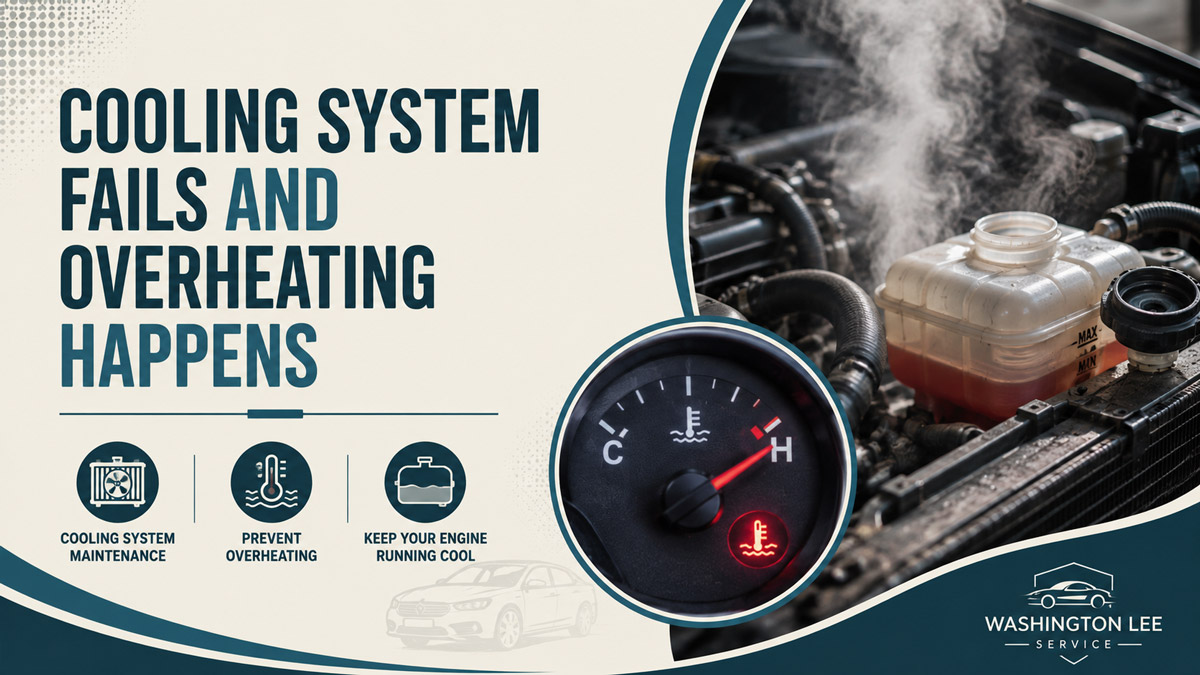
A temperature gauge that climbs is one of the few warnings that should end the drive.
An overheating engine can damage head gaskets, warp heads, and turn a small repair into an engine conversation. The listing photo of a car with its hood open and cooling fans removed shows the physical reality of this work: the cooling system is a set of real parts, and they fail in a predictable order.
The Cooling System as a Loop
Coolant moves from the radiator into the engine, picks up heat, and returns to the radiator, where the fans and the airflow release it.
The thermostat controls the loop, the water pump pushes it, and the hoses carry it. A failure anywhere in that loop shows up as heat.
The Classic Failure Order
Low coolant is the most common cause: a small leak, a bad cap, or a hose that weeps over months.
Next comes the thermostat, a mechanical part that can stick closed and trap the heat in the engine. Then the fans, which matter most in traffic and at idle.
Then the water pump, which usually announces itself with a weep hole leak before it fails completely.
What a Cooling Service Covers
A cooling inspection checks the coolant level and condition, the pressure cap, the hoses and clamps, the thermostat operation, and the fans.
The shop pressure-tests the system to find small leaks before they become big ones, and a coolant flush replaces the old coolant with the type the vehicle specifies.
Reading the Gauge and the Lamps
A gauge that sits higher than usual, a temperature lamp that flickers on hills, or a fan that never seems to run are all worth a call.
The temperature lamp on the dashboard is a bigger signal than the gauge: it is set to warn before damage, so treat it seriously.
A slow warm-up in winter is the other side of the coin, because a thermostat stuck open can keep the engine cold and hurt fuel economy and heater output.
Why the Fan Matters in Ohio Traffic
At highway speed, airflow through the radiator does most of the cooling work. In city traffic and at stoplights, the fans carry the load.
A car that runs fine on the highway but climbs toward the middle when it sits is a classic fan story.
The shop tests the fan circuit directly, including the temperature switch and the fan motor, before recommending parts.
The Water Pump and the Weep Hole
Water pumps carry a small weep hole that drips as the internal seal wears.
A few drops of coolant under the car after a drive are often the first warning, long before the pump fails completely.
The shop checks the pump area during a cooling inspection and can replace the pump and timing belt together on the vehicles that pair them, which saves a second labor charge.
Why the Flush Matters
Coolant does more than carry heat. It protects the engine from corrosion and raises the boiling point and lowers the freezing point.
Over time the additives deplete and the coolant turns acidic, which attacks the heater core and the radiator from the inside.
The vehicle’s maintenance schedule sets the interval; the shop confirms it for your car.
When to Stop Driving
If the temperature gauge moves into the red, or a warning light comes on, pull over and shut the engine off.
Driving on an overheating engine is how a cheap repair becomes an expensive one.
Let the car cool, check the coolant level if it is safe, and call the shop before you restart.
The Sweet Smell
A sweet smell from the car usually means coolant is leaking and hitting something hot.
It can be a hose, a heater core, a water pump, or a radiator.
The shop pressure-tests to locate it before parts are recommended, because a smell alone does not name the leak.
What a Heater Problem Can Tell You
A heater that blows cold in winter is often a cooling-system problem, not a heater-core problem.
A low coolant level, a stuck thermostat, or air in the system all show up as cold heat.
That is why the A/C and heating page and the cooling work share the same diagnostic start: check the loop, then the part.
Preparing for the Visit
Tell the shop when the temperature climbed, whether it happened at highway speed or idle, whether the fan ever ran, and whether you added coolant recently.
That history points the diagnosis in the right direction faster than a general overheating report.
Related Reading
- When a Check Engine Light Means Worse Before Better
- Air Conditioning & Heating Service
- Engine Repair & Diagnostics
Call the shop the next time the gauge climbs past the middle.